
Featured
I am giving this message because there is much confusion within the Church of God regarding the subject of Pentecost. I do not know whether peoples' salvation hangs in the balance because of disobedience, but at the same time I know that …
Through the centuries, theologians have devised many arguments to do away with the observance of God's holy days. They propose that various scriptures in the New Testament obviate the need for Christians to keep the days which God's law …
CGG Weekly
Spiritual Gifts, an Overview
God launched His church with a bang on the Pentecost after Jesus Christ's resurrection. As Head of the church, our Savior made sure that the people of Jerusalem—and others down through the ages—realized that something extraordinary and …

Today's Verse and Comment
1 Corinthians 6:16-20
(16) Or do you not know that he who is joined to a harlot is one body with her? For "the two," He says, "shall become one flesh." (17) But he who is joined to the Lord is one spirit with Him. (18) Flee sexual immorality. Every sin that a man does is outside the body, but he who commits sexual immorality sins against his own body. (19) Or do you not know that your body is the temple of the Holy Spirit who is in you, whom you have from God, and you are not your own? (20) For you were bought at a price; therefore glorify God in your body and in your spirit, which are God's.
Adultery creates a second one-body/one-flesh bond in opposition to the marriage. This will inflict severe damage upon the marriage relationship. The apostle says such sexual sins hurt so much because they are "sins against [our] own …
Recent Video
Recent Audio
CGG Weekly
Our End Time
by David C. GrabbeAs we trudge relentlessly into the time of the end, and the bright, warm days continue to be spiritually dark, we frequently cast about for any indicator of how much longer it will be until Jesus Christ returns and brings the mad rule of man to a close. We constantly scour the prophecies and our Savior's prophetic parables for any overlooked instruction that might guide us through these times of turmoil and disquiet. Yet, the specifics we seek remain obstinately hidden — and for good reason, for such knowledge could easily cause us to corrupt ourselves (see Matthew 24:45-51; Luke …
Read More
Forerunner Magazine
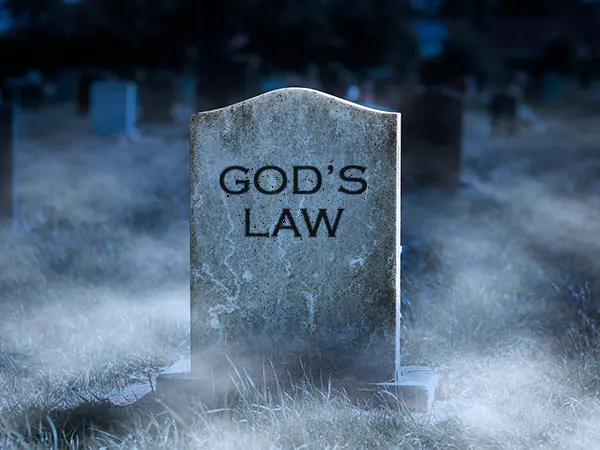
The apostle Peter admits that many of the things that his fellow apostle Paul wrote are hard to understand, and because of this, he …

A troubling trend has developed among Western nations in recent years. After several hundred years of mostly tolerant attitudes—and …

As we study the meaning of God's holy days, a logical pattern emerges, unlocking truths that remain a mystery to most people around the …

In October 2008, a protest movement called "The Atheist Bus Campaign" began in London. It was the brainchild of a woman who became …

Every year, God takes us through a series of seven holy days to remind His church of His plan for all mankind. Each holy day reveals …

For centuries, the Christian churches of this world have believed that our Savior, Jesus Christ of Nazareth, died for our sins on Friday …
